Cutting GPU Inference Cost by ~75% in 2026
Every team building AI in 2026 is quietly fighting the same tax: GPUs are expensive, scarce, and easy to waste. The good news — the cost curve bent this year, and not just because of new hardware.
The hardware shift
AMD’s Instinct MI350P benchmarks at roughly 40% faster than Nvidia’s H200 at about $30K, and it’s air-coolable — so data centers can drop it into existing racks without rewiring for liquid cooling. The MI400 line (CDNA5, 2nm) pushes further. The real story is software: ROCm is being marketed as “open, low- and no-cost” against CUDA’s lock-in. Competition is finally showing up on the inference side, not just training.
The architectural win: tier your GPUs
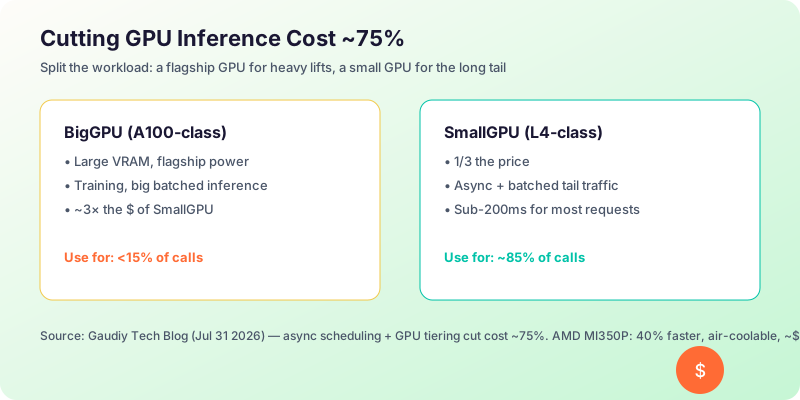
The bigger saving isn’t silicon — it’s scheduling. Gaudiy’s engineering blog (Jul 2026) documented cutting GPU inference cost by ~75% with a simple split: a flagship BigGPU (A100-class) for the heavy 15% of calls, and a SmallGPU (L4-class, about a third the price) for the long tail, glued together with async batching. Most requests don’t need a flagship card. Stop paying for one.
Three tactics that actually move the bill
- Spot + reserved mix on EC2: egress and idle reserved instances are where 30–50% hides. Audit both.
- Async batching for non-interactive inference — collapse the long tail onto cheap hardware.
- Quantize before you scale. A 4-bit model on a SmallGPU often beats a full-precision model on a BigGPU for the same latency budget.
At Make In India Studio we run inference on a small EU server and route only the heavy lifts upward. Craft is cheaper when the architecture is honest about what each request actually needs.
Sources
- tech-insider.org — AMD MI350P vs Nvidia H200 (2026)
- techblog.gaudiy.com — “How We Cut GPU Inference Cost by ~75%” (Jul 31 2026)
- markaicode.com — Amazon EC2 GPU pricing hidden costs (2026)